

Dolphins are toothed whales, belonging to the suborder Odontoceti, with most species part of the oceanic dolphin family, Delphinidae.
The familiar bottlenose dolphin’s scientific name is Tursiops truncatus, a highly intelligent and widely studied marine mammal.
Scientists currently recognize around 40 to 42 dolphin species, though exact numbers may vary slightly as new research updates classification.
Dolphins live in oceans worldwide, from tropical seas to temperate zones, and some species, like the Amazon river dolphin, thrive in freshwater rivers. While most dolphins live in the ocean, several species are adapted to river systems, particularly in South America and Asia.
Their sleek, streamlined body shape, narrow at both ends (fusiform), helps reduce drag and enables fast, energy-efficient swimming.
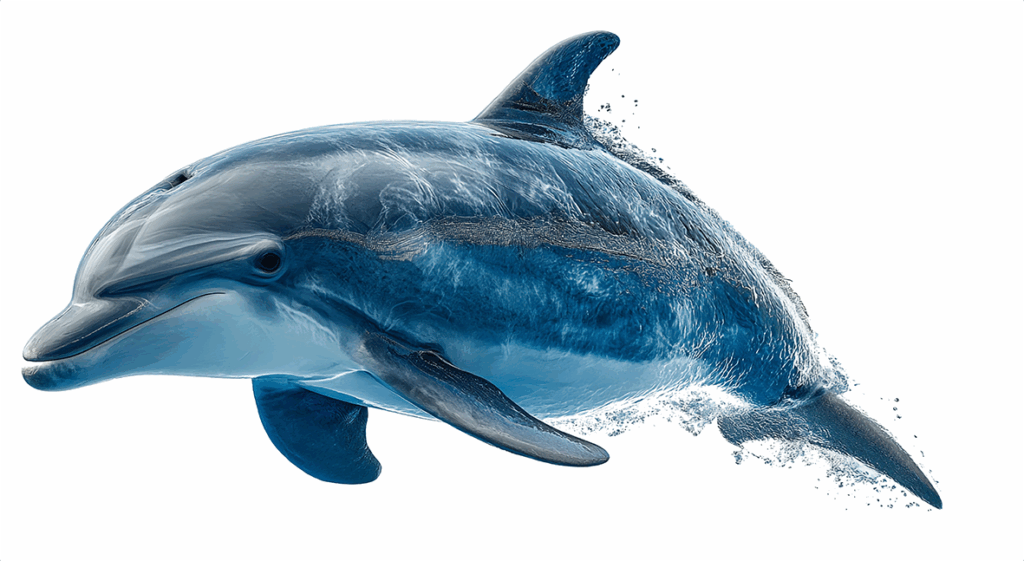
Dolphin skin is smooth and rubbery, often coloured with counter-shading: darker on top and lighter underneath, helping them blend into their environment.
Size varies dramatically among species: some river dolphins are under 2 meters, while the largest dolphin, the killer whale, can grow over 8 meters long.
Most dolphins have a distinct beak-like snout (called a rostrum) and a single blowhole on top of the head for breathing air at the surface.

The dorsal fin stabilizes dolphins while swimming; its shape is unique to each species, and often to individuals, making it useful for identification. As mammals, dolphins must surface regularly to breathe air through their blowhole. They cannot extract oxygen from water.
Dolphins sleep with one half of their brain at a time, allowing them to rest while still surfacing to breathe and staying alert for predators. Highly social animals, dolphins typically live in groups called pods, which can range from just a few individuals to hundreds, depending on species and conditions. While “pod” is the most common term, older or poetic names like “gam” (used for whale or dolphin meetings) are still used by mariners and researchers to describe social gatherings.
Strong social bonds help dolphins cooperate during hunting, protect young, and navigate complex environments together. They communicate using a mix of clicks, whistles, and body language. Some species develop unique “signature whistles” that function like individual names.
Dolphins use echolocation (emitting high-frequency clicks) to detect prey, avoid obstacles, and navigate in dark or murky waters. Echolocation works when sound waves bounce off objects and return to the dolphin’s lower jaw, where they’re transmitted to the inner ear for processing.
They can “see” with sound so clearly, they can spot a coin on the seafloor in total darkness, thanks to their advanced echolocation. Dolphins can detect tiny objects and even determine the internal structure of prey, like whether a fish has a full stomach, just from the returning echoes.
All dolphins are carnivores, primarily eating fish and squid. Some larger species also consume crustaceans or even other marine mammals.
Hunting strategies vary widely for the different dolphins species. Dolphins may hunt alone, work together to herd schools of fish, trap prey on shorelines, or use tools like sponges to protect their snouts while foraging.
Bottlenose dolphins often hunt cooperatively, working together to gather fish into dense groups that make feeding easier for the whole pod.
Although dolphins possess teeth, they use them mainly to grasp prey, which they swallow whole rather than chew. Their digestive systems are adapted to a high-protein, seafood-based diet, with strong stomachs and efficient intestines.
Sexual maturity depends on species, sex, and location. Females often mature earlier than males. Dolphin pregnancies (gestation) typically last 10 to 12 months for coastal species like the bottlenose dolphin. Most dolphin mothers give birth to a single calf and twins are very rare in the wild.
Calves typically arrive tail-first, a birth position that helps prevent them from inhaling water before reaching the surface. Newborns are able to swim right away and usually reach the surface for their first breath moments after being born.
Mothers nurse their calves with rich, fatty milk. Nursing can last from several months to over a year, depending on the species. Dolphin mothers are fiercely protective, and other pod members sometimes assist in caring for calves, a behavior known as alloparenting.
Lifespans vary: smaller species may live around 20 years, while many bottlenose dolphins can live 40 to 50 years or more in the wild. Natural predators include large sharks and killer whales, while humans also pose threats through bycatch, hunting, and habitat disruption.
Major human-caused threats include entanglement in fishing gear, boat strikes, pollution, habitat loss, and underwater noise. Many dolphin populations are protected under national laws and international agreements, though conservation status varies by species and region. Dolphins are among the most intelligent animals on Earth, showing problem-solving skills, tool use, and behaviors passed down through generations.
Some dolphin populations use marine sponges on their rostrums while foraging, a learned behavior believed to protect their sensitive snouts. Their brains are large relative to body size, with complex regions linked to social cognition and advanced sound processing. Due to their intelligence and social nature, dolphins learn quickly in captivity and can be trained to perform complex tasks and behaviours.
Play is common in dolphins. They leap, surf waves, ride boat bows, and toss objects, activities that build social bonds and sharpen survival skills. In some species, adult males form long-term alliances or coalitions to compete for access to females, which is a rare level of social complexity in the animal kingdom.
River dolphins are generally more endangered than oceanic dolphins due to pollution, dam construction, and heavy river traffic. Scientists track individual dolphins using photo-identification, analyzing unique dorsal fin shapes, nicks, and scars over time.
Dolphins exhibit cultural behaviours, such as distinct hunting techniques that are learned socially and passed from one generation to the next. They have the ability to modify and mimic sounds, including human-made noises, showing a high degree of vocal learning and flexibility.
Underwater noise from ships and industrial activity can interfere with echolocation and communication, reducing feeding success and increasing stress levels.
Some dolphin species migrate seasonally, moving to follow food sources or reach warmer waters for breeding.
Researchers study dolphins using satellite tags, acoustic monitoring, behavioral observation, and genetic analysis to better understand their health and population trends.
In a few places around the world, dolphins have formed cooperative relationships with fishermen, herding fish toward nets in mutually beneficial interactions.
The killer whale (orca) is actually the largest member of the dolphin family, not a true whale, and belongs to the Delphinidae family.
Dolphins have special physiological adaptations for diving, including high levels of myoglobin in their muscles to store oxygen and the ability to redirect blood flow during deep dives.
Many aquariums and marine centers participate in rescue, rehabilitation, and release programs for stranded or injured dolphins, though outcomes depend on the individual case.
There are well-documented cases of dolphins carrying deceased calves for days, refusing to let go. This behavior suggests deep emotional bonds and possible mourning — a sign of complex social and emotional lives.
Dolphins may have regional “accents”, just like humans. Dolphin groups in different areas can have slightly different calls and whistles. For example, bottlenose dolphins in Scotland sound different from those in Florida, a sign of vocal learning and cultural variation.
Ongoing research continues to refine dolphin taxonomy, population estimates, and conservation needs, meaning our understanding evolves as new data emerges.
PRO TIP
“Quick Dolphin Facts to Wow Your Friends!” Dolphins sleep with half their brain at a time so they can keep breathing and watch for danger. Newborn calves swim right away and reach the surface for their first breath within moments. Some dolphins carry sponges on their snouts as tools to protect themselves while foraging. The orca (killer whale) is actually the largest dolphin species! Dolphins can detect tiny objects, even in total darkness, using their highly advanced echolocation.