BY TRACY MCQUARRIE

One of the biggest misconceptions about dog behaviour is that dogs do things because they’re being stubborn, dominant or “naughty.” The truth is much simpler.
Dogs repeat behaviours that work for them.
Every single day, our dogs are learning from the consequences of their actions. If a behaviour gets them something they value, whether that’s attention, food, access to something exciting or simply making something unpleasant go away, they’ll be far more likely to do it again.
The interesting part is that what we think is rewarding and what our dog finds rewarding are often very different things.
Take one of the most common examples: jumping up. Your dog sees you after a long day and leaps up to greet you. Instinctively, you push them away and say, “No!” Most people believe they’ve corrected the behaviour but from your dog’s perspective?
“I wanted Mum or Dad to interact with me… and it worked!”
You spoke to them.
You touched them.
You engaged with them.
Mission accomplished.
Even though you were trying to stop the behaviour, your dog achieved exactly what they wanted, your attention. In their eyes, jumping was successful, so they’re likely to try it again next time. This is why it’s so important to stop looking at behaviour from our perspective and start looking at it through our dog’s eyes.
Instead of asking, “How do I stop my dog doing this?” try asking, “What is my dog getting out of this behaviour?”
Once you understand the reward, you can begin changing the behaviour. The good news is that unwanted behaviours don’t have to last forever. Most of them have simply been learned over time because they’ve worked.
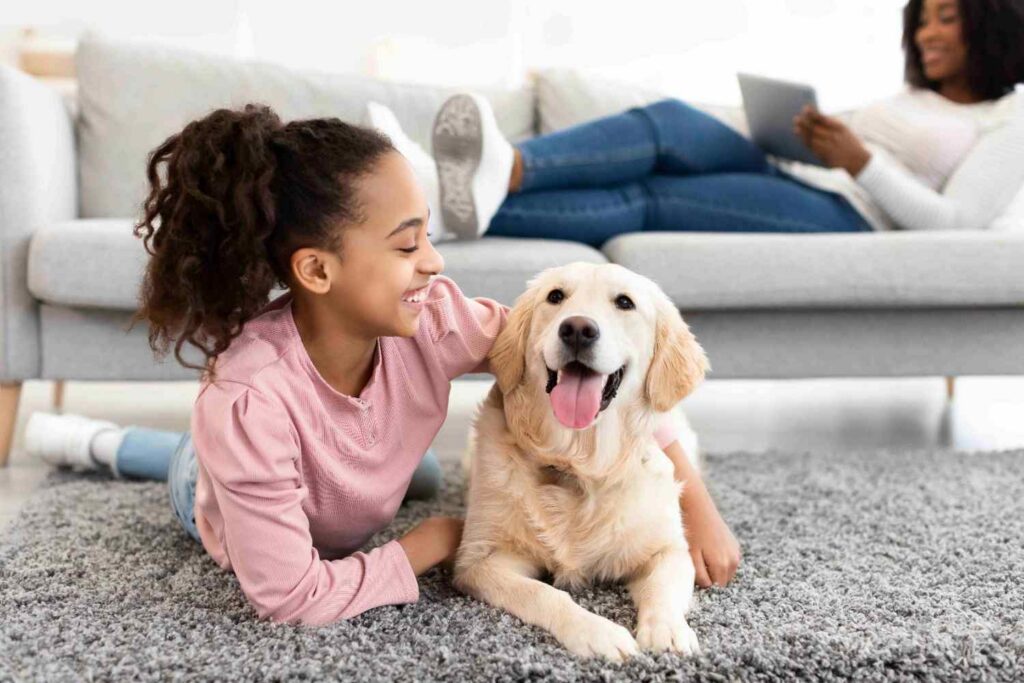
And if a behaviour can be learned, it can also be replaced.
You can change the legacy of an unwanted behaviour by simply replacing it with a behaviour you do desire. Rather than focusing on what you don’t want your dog to do, teach them what you do want instead.
Instead of correcting the jump, teach your dog that sitting politely is the fastest way to earn your attention. Every time they approach and sit, reward them with praise, affection or a treat, whatever your dog values most. Very quickly, your dog begins to realise: “When I sit, wonderful things happen.” And here’s the clever part, a dog can’t be sitting and jumping at the same time.
You’ve replaced an unwanted behaviour with a desirable one instead of simply trying to suppress it. This approach doesn’t just stop unwanted behaviour, it builds understanding, confidence and trust.
As trainers, one of the questions we ask most often isn’t: “What don’t you want your dog to do?” Instead, we ask: “What do you want your dog to do instead?”
That simple shift changes everything.
Training isn’t about constantly telling dogs “no.” It’s about showing them the behaviours that will be successful for them.
Always use positive reinforcement when teaching your dog new behaviours. By rewarding the behaviours you want to see, you help your dog understand what earns success while building confidence and creating a relationship based on trust rather than fear. Dogs learn best when they feel safe, understood and motivated to make good choices.
“The goal isn’t to stop your dog from doing the wrong thing. The goal is to make the right thing the easiest and most rewarding choice.” When we reward the behaviours we want to see, those behaviours become the ones our dogs naturally choose.
And that’s when training stops feeling like a battle and starts becoming a conversation, one that strengthens the bond between dogs and the families who love them.
We also need to remember that we are asking dogs to live in our crazy human world, which is very different from how they would naturally live. Because of this, giving your dog an outlet or a “job” that allows them to express natural behaviours is one of the best boredom busters you can offer. Sniffing games, food searches, enrichment toys and structured activities all help meet those instinctive needs in a healthy way.
So, when we begin to see our dogs for the incredible beings they are, not as animals trying to be “naughty,” but as learners simply repeating what has worked for them, we can become the teachers they deserve. By guiding them through our human world with patience, positive reinforcement and trust, we replace frustration with understanding and unwanted behaviours with lifelong skills.
When we do this, we create something far more valuable than a well-trained dog. We build a relationship founded on mutual respect, clear communication and unconditional love, a legacy of a truly extraordinary bond that lasts a lifetime.
FOR MORE INFORMATION ON DOG BEHAVIOUR AND HOW YOU CAN HELP YOUR PUP THRIVE, CONTACT DOGTOWN SA.
www.dogtownsa.org
076 044 1979 | info@dogtownsa.org