Cape Town isn’t just growing in theory. It’s happening in real time. The City of Cape Town approves tens of thousands of new residential apartments every year, while somewhere between 11,000 and 17,000 homes are actually completed annually. And still, it’s not enough. The demand keeps climbing, the waiting lists keep growing, and the skyline keeps shifting to keep up.
Drive along the Atlantic Seaboard and you’ll see it immediately. Cranes cutting into the skyline. Scaffolding wrapped around buildings that didn’t exist a few months ago. Entire pockets of the city quietly transforming while we get on with our day.
There’s an energy to it.
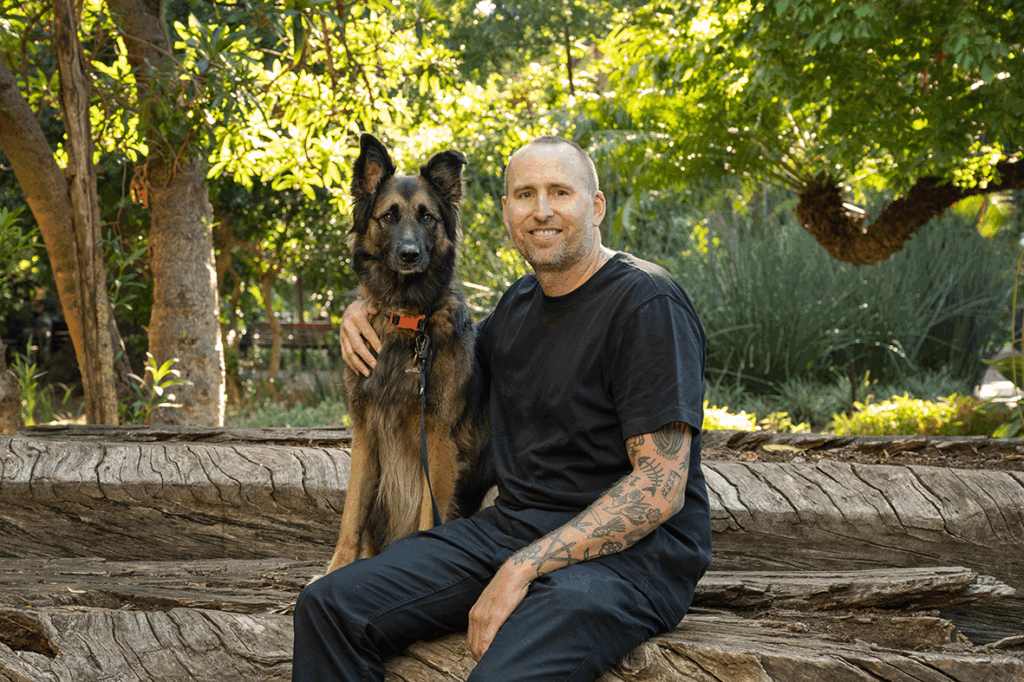
PHOTOGRAPHY: EMMA O’BRIEN | MAKE-UP: LAUREN RACQUEL | WORDS: MARISE BURGER | BEAR DRESSED BY: FETCH PETS
WE’RE BUILDING. EXPANDING. MOVING FORWARD.
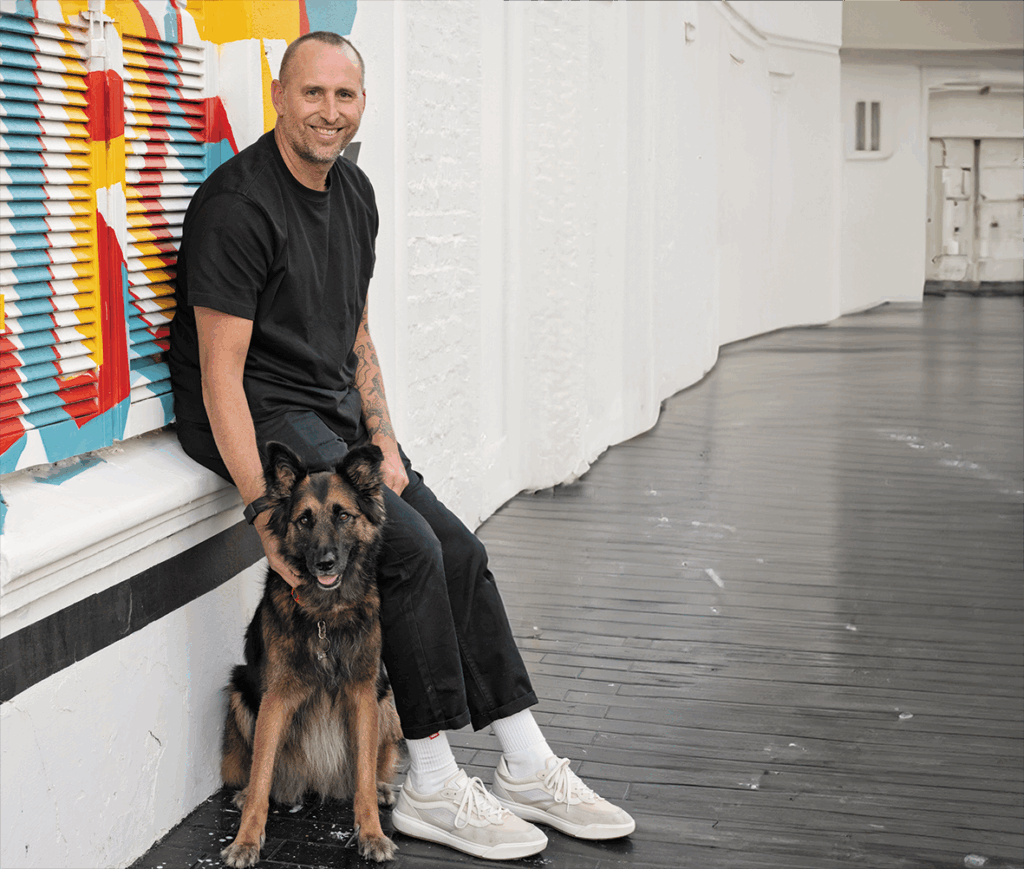
And somewhere in the middle of all of that, I found myself sitting across from Troy Squires, with Bear sprawled next to him, completely uninterested in the pace of the world outside.
It struck me then that while the city is growing at full speed, the real question isn’t how fast we’re building. It’s what we’re building for.
Blok, for context, isn’t just another developer adding to the skyline. They’ve quietly built a reputation for rethinking how people live in Cape Town, with over 20 thoughtfully designed developments already completed and more unfolding across the Atlantic Seaboard and city bowl. Their focus has always been on urban apartment living that feels intentional rather than cramped, spaces that work with your lifestyle instead of against it. And importantly, they’ve never treated pets as an afterthought. From the beginning, their buildings have been designed with pet-friendly living in mind, not just allowing it, but embracing it. It’s a small detail on paper, but in reality, it speaks to something much bigger about who they’re building for and how they understand modern living.
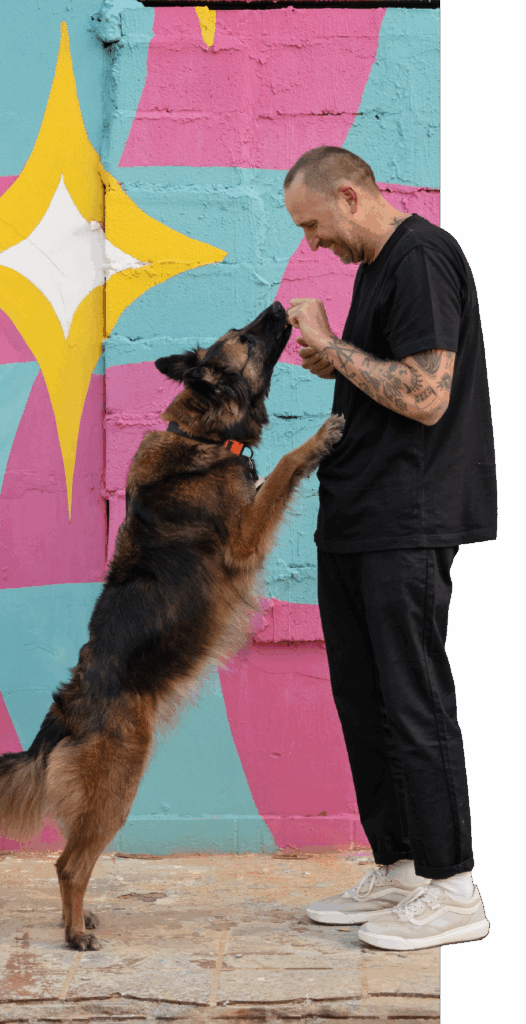
Because growth isn’t just about space. It’s about people. It’s about how we live, how we connect, and how we shape the lives we’re stepping into. And more often than not, those lives don’t exist in isolation. They expand. They evolve. They make room for something, or someone, else. Sometimes, that shift is big. And sometimes it starts with something as simple as a dog.
That’s where our conversation really began. Not with buildings or floor plans, but with Bear. With the reality of what it actually means to live in a space, rather than just occupy it. While Blok may design the framework, it’s people, and the lives they build within those walls, that ultimately give it meaning.
Almost immediately, the conversation moved away from buildings to something warmer and more meaningful. “A building is tangible,” he said. “A neighbourhood is the feel of it. The soul.” And that word stayed with me.
SOUL
If you look at Cape Town right now, it’s easy to get caught up in the physical growth. The numbers tell that story clearly enough. The metro population has surpassed 4.8 million people, with urbanisation across South Africa sitting at around 67% and rising. Housing demand continues to climb, with a national backlog of over 2.3 million homes. Apartment living is no longer a lifestyle choice for a niche group of people. It’s becoming the norm.
We need more space. That part is undeniable. But space without soul doesn’t hold people. It just houses them. And that’s where the idea of neighbourhood becomes something much more meaningful. A neighbourhood isn’t just where you live. It’s how you live. It’s the familiarity of the same barista remembering your order. It’s the person you nod to every morning without ever really knowing their name. It’s the quiet understanding that you belong to something, even if it’s small.
And, as it turns out, it’s often a dog that gets you there.
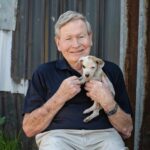
Bear came into Troy’s life in a way that felt both ordinary and extraordinary at the same time. She was part of a litter born after her mother was rescued by TEARS Animal Rescue. Eight puppies. One moment. One decision.
“She looked like a little bear,” he said, almost laughing at how obvious it seems now.
The decision was simple and the bond was solid. But anyone who’s had a dog knows it’s never just that simple. Dogs require exercise and play time and a lot of attention, so what started as companionship quickly becomes something deeper.
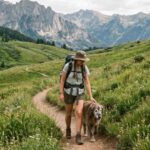
“She gets me out,” he said. “Even on the days I don’t want to.
There’s something honest about that. No overthinking. No big statement. Just the reality of what it means to share your life with an animal. You don’t always feel like showing up. But they do and so you go. You walk. You explore. You notice things.
And slowly, without realising it, you start building a life that’s bigger than just you.
We often talk about growth in very structured ways. Career growth. Financial growth. Business growth. But there’s another kind of growth that doesn’t come with targets or timelines. It’s the growth that happens when you expand your life to include something or someone else. When you take on responsibility. When you create routine. When you begin to see your surroundings not as something you pass through, but something you’re part of. Dogs have this quiet way of facilitating that.
Troy spoke about how Bear has shaped his relationship with the city. How walking isn’t just exercise, it’s exploration. How you begin to recognise people, rhythms, patterns.
And that’s when it clicked for me.


QUICK FIRE NO OVERTHINKING
Morning walkies or evening walkies? “Evening, no doubt.”
Coffee at home or coffee at a café? “Café. Because there’s something about someone else making your coffee that just hits differently.”
Did you choose Bear, or did she choose you? “She chose me” Apparently, she had this quiet leadership energy, even as a puppy. The kind of presence that naturally draws you in.
The first thing Bear destroyed? “A TV remote. And not just one.”
Who takes up more space on the couch? “Also Bear.” No hesitation.
One word to describe her? “My everything.”
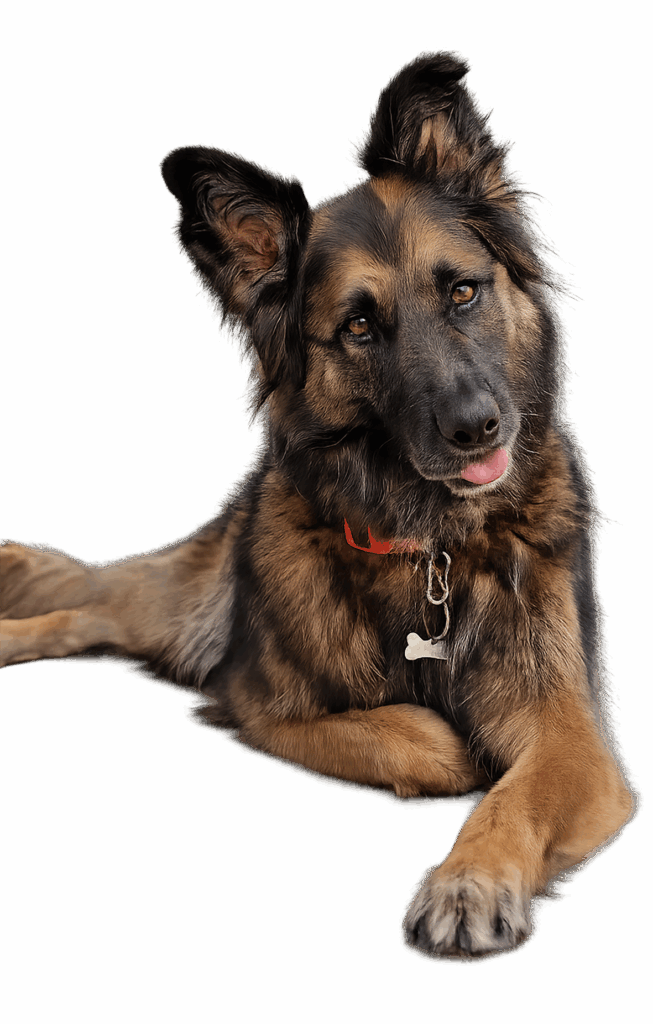
And if Bear had to describe Troy? “Annoying,” he laughed. Because he never leaves her alone.
If Bear were an architect, what kind of space would she design? “Green space.” Which, honestly, feels like the most on-brand answer for a dog living in a city that’s growing as quickly as this one. And then the question that felt surprisingly fitting for everything we’d been talking about.
What’s harder, raising a brand or raising a puppy? “A brand,” he said. Because a brand is intangible. It needs constant shaping, constant direction. A puppy, on the other hand, meets you halfway.
In a city that’s growing this quickly, it’s easy to feel disconnected. Like you’re just moving between spaces rather than living within them. But dogs don’t let you do that.
They root you. Cape Town is uniquely positioned for this kind of lifestyle.
We have the mountain. The ocean. The trails that feel endless if you’re willing to explore them. But what stood out to me was how Troy spoke about the promenade. Not as a landmark. Not as a scenic route. But as a shared space.
“The promenade is probably Cape Town’s greatest asset,” he said. And the more he described it, the more it made sense. It’s accessible. It’s free. It belongs to everyone.
You see families walking together. Elderly people being pushed in wheelchairs. Runners, couples, children, dogs. People from completely different walks of life, all occupying the same space at the same time.
There’s something incredibly grounding about that because in a world that’s becoming increasingly segmented, increasingly curated, spaces like that remind us what community actually looks like. Not perfect. Not planned. Just real.
And then there’s the way dogs naturally weave themselves into that. They’re conversation starters. Ice breakers. Connectors.
You stop because your dog wants to sniff another dog, and suddenly you’re talking to someone you’ve never met before. You share a moment. Maybe a laugh. Maybe just a nod of understanding. It’s small, but it matters. Because those are the moments that build neighbourhoods. Not the buildings themselves.
This is where the conversation circled back to Blok, but in a way that felt much more human. From the beginning, they’ve approached development with the idea that people want their pets to be part of their lives not separate from it. And the numbers support that.
Roughly 45% of South African households have pets. Globally, pet ownership surged during COVID and hasn’t slowed down since. For many people, especially in urban environments, pets are not just companions. They’re family.
So, when you design spaces that don’t accommodate that, you’re not just limiting functionality. You’re limiting connection and that’s something more developers are starting to understand. Because a home isn’t just defined by its square meters. It’s defined by what it allows you to bring into it.
One of my favourite parts of the conversation was hearing about an initiative called Run for the Dogs. It’s simple, but brilliant. People who can’t own dogs, whether because of their living situation or lifestyle, can spend time with shelter dogs by taking them for walks or runs. It creates connection for the person and enrichment for the dog.
It’s one of those ideas that feels obvious once you hear it. Of course, people need that. Of course, dogs benefit from it. And it ties back into something much bigger.
There are ways to step into community. Ways to be part of something, even if your circumstances don’t allow you to do it in the traditional sense.
Of course, with growth comes responsibility. Pet-friendly spaces only work if people respect them. Troy touched on this in a very real way. One or two bad experiences can shift perceptions quickly. So as much as we want more inclusive environments, we also need more mindful ownership. Understanding boundaries. Being considerate of others. Recognising that not everyone is comfortable around animals.
It’s not about restriction. It’s about balance. And in a city that’s constantly evolving, that balance becomes even more important.
By the time we wrapped up, Bear was still lying there, completely unbothered by deadlines, developments, or the pace of the city outside.
And maybe that’s the lesson in all of this. Cape Town is growing. Rapidly. Unapologetically. We’re building higher. Living closer. Moving faster. But that doesn’t mean we have to lose the things that ground us. Growth doesn’t have to mean disconnection.
It can mean expanding your family, in whatever form that takes. It can mean redefining what a healthy lifestyle looks like, not as something rigid, but as something lived. It can mean stepping into a community you didn’t even realise was there.
Because at the end of the day, a city is just a collection of spaces. A neighbourhood is what we make of them. And sometimes, all it takes is a dog… to show you exactly where you belong.