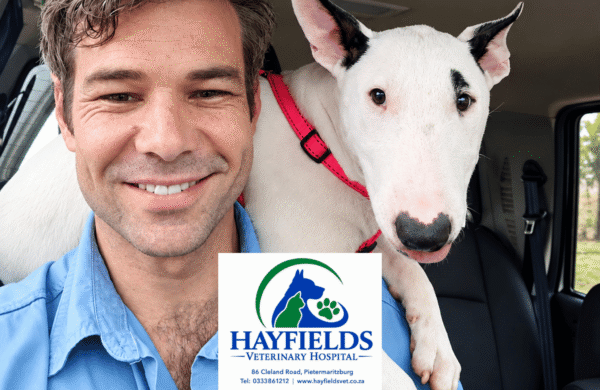

Ask The Vet – Dr. Travis Gray
- Categories - Articles
Hi, my name is Travis and I’m a vet at a referral practice in Cape Town, dealing exclusively with dogs and cats. I’m a catlover, and proud cat-dad to two rescues named Natsu and Falcon. In a world filled with conflicting veterinary information, Pet Prints has given me a chance to try and make sense of some of the muddle. So, if you have anything you want to ask, send it through and I’ll do my best to help you out.
Q: Dear Dr Travis, our very old cat is starting to struggle with quality of life and we’re almost at the place where we need to have her put down. I’m having difficulty in how to put this into words for our 6 year old daughter. In your experience, should we involve her in his process or is it better to not do so? I want to save her the pain of saying goodbye, but also want her to be able to do so to understand and appreciate animals. I’m sorry if this is an irrelevant question to this column. I just don’t know who to ask.
A: I’m very sorry to hear about your cat. The decision to euthanase a pet due to poor quality of life is always a difficult one, and it becomes a much heavier decision when children are involved. My advice would be to approach this delicately, but also honestly. As painful as it may be, she deserves to know what’s going to happen and have the chance to say goodbye. I would suggest approaching the topic by talking about how your old cat is struggling and there isn’t anything that anyone can do to make her feel better. Explain that the kindest thing to do is to take her to the vet where she will get an injection that will stop her breathing and heartbeat so that she’s not hurting anymore. Personally, I don’t see an issue with using gentler phrases such as “putting to sleep”, although I’m sure there are vets out there that will disagree with me. It’s very important that whichever words you use to explain the euthanasia, you must be sure that your daughter understands that this will be permanent and she will be saying goodbye to her forever. The news will likely be upsetting, and might be your daughter’s first experience of death. She must know that it’s okay to feel sad and to wish that there was another option. I think the important take home message is that you all love your cat very much, and it’s because you love her that you have to make the difficult decision to end her suffering.
Whether she should be present for the actual procedure depends on three factors: your daughter, your vet and you. You could start by asking her how she feels about being with when the injection is given. In my experience, children tend to handle the procedure well; provided they understand what’s about to happen. If she does want to go with you, I would suggest having another family member or close friend that comes with to take her out of the room if she isn’t coping with the situation. Also be sure that if she does come with, you are seeing a veterinarian who is comfortable with children. Unsurprisingly, some vets aren’t great with children, and you’re going to want to be doing the euthanasia with a vet who will be willing and able to answer any questions that she might have.
Lastly, you need to consider how you are going to cope with the situation yourself. Many adults take a lot of emotional strain with euthanasia. There’s nothing wrong with that at all, but if you are one of those people who are inconsolable in a euthanasia appointment, then I would advise against bringing your daughter as your emotional state would be distressing to her.
Q: Hey Dr T! I wanted to ask you for help with what to feed my 6 cats. Here’s the thing. It’s very expensive to buy so much food and I want to be able to cook some food for them (I’m pretty good in the kitchen.) But none of the foods that I’ve looked at, especially the expensive brands, provide ingredients on their packaging. Is this not compulsory like on human food? What alternative brands would you suggest being cost effective?
A: Formulating a diet for a cat is an intricate and time consuming process. To complicate things further, a cat’s nutritional requirements change depending on their age and overall health. Cats are also obligate carnivores, so you have to be sure to use animal protein in their diet to make sure that they receive all the essential amino acids (protein building-blocks) needed to keep their bodies healthy. This would make a person assume that feeding only meat to their cat is a good idea, but meat alone wouldn’t provide the nutritional needs to keep a cat healthy, as there are minerals and vitamins that aren’t found in high qualities in muscle tissue. Additionally, fiber isn’t an essential component of a cat’s diet, but adding a fiber source to their diet helps to keep their gut flora healthy and reduces weight gain.
Regarding your question, my advice would be to feed the best that you can afford. I don’t like to discuss specific brands in these segments because the purpose of these answers isn’t to promote or discourage any products in particular, but rather to give some guidance on how to choose for yourself. Speaking honestly, I do think that you will struggle to formulate a balanced, home-cooked diet that is significantly more economical than a commercial diet. There are some really good local diets that are more cost-effective than the imported ones, so it might be worth heading to your local vet shop and seeing what they stock.
All commercially sold pet foods in South Africa must have a list of ingredients on the packet, which lists each component in order of weight. I do find that these labels are often small and difficult to find, but they have to be there. If you need help interpreting the label, or for any further nutritional information that you might have, I can recommend the WSAVA Global Nutrition Toolkit. Here you’ll be able to find useful information for both vets and the general public.
Q: Hi Dr Travis, we feed our dogs kibble and it gets left on the stoep every morning and every night. I’ve seen the pigeons eating the kibble and they swallow it whole. I just wanted to find out if this is safe for them. I can’t leave the food inside during the day, but I also don’t want to hurt the birds. Do you have any advice on this?
A: Dog kibble is not recommended to feed to birds, however, in wild birds that are likely eating a varied diet, I think you can feel comfortable that you aren’t causing any harm to the pigeons. I would still advise against leaving food outside. From a nutrition point of view, this gives you very little control over how much each of your dogs is eating. You may also end up wasting quite a bit of food. While kibble doesn’t spoil as quickly as wet food does, if it is left out, it tends to dry up and lose palatability so your dogs may not want to eat it. The kibble will also be attractive to other animals such as rats, which could be carrying diseases that are transmissible to dogs. The pigeons could be a disease risk too.
For these reasons, I would recommend sticking to two set feeding times for your dogs. The food can stay down until they are done eating their portions, and then be lifted up again.
Q: Dear Doctor, I’m thinking of getting a Guinne Pig as a first pet for my 10-year-old daughter. Growing up on a farm, we had many animals, but I’ve never owned one of these. Do you think this is a good pet for a little girl? Is there anything we should know or be prepared for? She is very excited, but I want her to take full responsibility for this animal.
A: Guinea pigs make great pets for children, especially since they do require some responsibility to care for properly. They can be quite prone to health problems if not fed the right diet, so be sure to feed a diet that’s high in roughage to maintain their teeth, and provides them with enough Vitamin C to keep them healthy. The cage must also be well ventilated and have enough floor space as guinea pigs don’t do well in small cages. The cage will need a thorough clean once weekly, but any waste should be removed daily. Your daughter should also groom the guinea pig once a week to prevent any skin issues or matted hair, which can be uncomfortable.
Being prey animals, guinea pigs can be quite nervous and skittish to start off with, so your daughter mustn’t have an expectation that they will be best buds right away. It will take a bit of time and patience before the guinea pigs will be comfortable around her. To start off with, I would suggest that their time together is supervised. Also be aware that guinea pigs are social creatures so it is advised that they are kept in pairs, rather than in solitude. Just be sure to have a pair of the same gender to prevent any unwanted babies.
If you have a question about your pets health that you would like to ask Dr Travis, please email us at mail@petprints.co.za