
THE AFRICAN DRIVER ANT BELONGS TO THE GENUS DORYLUS, ONE OF THE MOST FAMOUS GROUPS OF ANTS IN AFRICA.
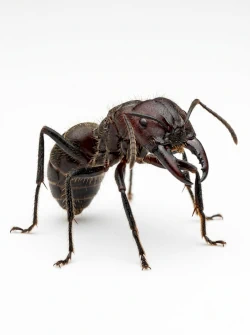
THE AFRICAN DRIVER ANT BELONGS TO THE GENUS DORYLUS, ONE OF THE MOST FAMOUS GROUPS OF ANTS IN AFRICA.
Driver ants are part of the animal kingdom Animalia.
They belong to the phylum Arthropoda, which includes insects, spiders, and crustaceans. Their class is Insecta, meaning they are true insects with six legs and three body sections.
Driver ants belong to the order Hymenoptera, the same order as bees and wasps.
Their family is Formicidae, which includes all ants worldwide.
Scientists have identified more than 60 recognised species in the Dorylus genus. Some of the best-known species include Dorylus helvolus and Dorylus nigricans.
Driver ants are closely related to army ants found in South America.
DRIVER ANTS ARE NATIVE TO AFRICA AND OCCUR NATURALLY ACROSS MUCH OF SUB-SAHARAN AFRICA, WITH SOME SPECIES WITHIN THE BROADER DORYLUS GENUS EXTENDING INTO TROPICAL PARTS OF ASIA AS WELL.
In South Africa, they are mostly found in warmer northern and eastern regions.
DRIVER ANTS HAVE EXISTED FOR MILLIONS OF YEARS AND ARE CONSIDERED ANCIENT SOCIAL INSECTS. FOSSIL EVIDENCE SUGGESTS ANTS EVOLVED FROM WASP-LIKE ANCESTORS MORE THAN 100 MILLION YEARS AGO.
Tiny hooks on their feet help them climb over rough ground and vegetation.
Scientists study driver ants to better understand teamwork, communication, and insect societies.
UNLIKE MANY INSECTS, ANTS ARE EUSOCIAL ANIMALS, MEANING THEY LIVE IN HIGHLY ORGANISED COLONIES WITH SPECIALISED ROLES.
Driver ants prefer warm tropical and subtropical climates.
In South Africa, they are most commonly associated with bushveld, savanna, woodland, and forest-edge habitats. They usually avoid very cold mountain areas and extremely dry deserts.
DRIVER ANT BIVOUACS ARE TEMPORARY UNDERGROUND CHAMBERS EXCAVATED FROM SOIL, FORMING A NETWORK OF TUNNELS AND SPACES LARGE ENOUGH TO SHELTER MILLIONS OF INDIVIDUALS AT ONCE.
Colonies often move to new areas when food becomes scarce.
Some colonies can travel hundreds of metres during a migration.
THEIR MOVEMENT THROUGH THE ENVIRONMENT HELPS SPREAD NUTRIENTS ACROSS ECOSYSTEMS.
Driver ants navigate by detecting pheromones, laying down chemical scent trails that act as highways guiding the entire colony through the landscape.
Colonies often choose shaded routes to protect themselves from extreme heat.
Heavy rain can flood their nesting chambers, forcing entire colonies to relocate quickly. Worker ants constantly repair damaged tunnels after storms or animal disturbances.
DRIVER ANTS ARE IMPORTANT RECYCLERS IN AFRICAN ECOSYSTEMS, HELPING TO REMOVE DEAD INSECTS AND SMALL ANIMALS FROM THE ENVIRONMENT.
DRIVER ANTS TRAVEL IN MASSIVE MARCHING COLUMNS THAT MAY STRETCH FOR MANY METRES.
Their underground chambers help regulate temperature and humidity around the brood.
SOME DRIVER ANT COLONIES CONTAIN MORE THAN 20 MILLION INDIVIDUALS, MAKING THEM THE LARGEST ANT COLONIES OF ANY SPECIES ON EARTH.
Driver ants vary greatly in size depending on their role within the colony.
Small worker ants may measure only 3 to 6 millimetres long. Large soldier ants can reach nearly 2 centimetres in length.
The queen is much larger than the workers and may grow over 5 centimetres long.
Most driver ants are dark brown, reddish-brown, or black in colour.
Their bodies are covered with a hard outer skeleton called an exoskeleton.
Did You Know?
- During a hunt, driver ant swarms fan out into a raiding front that can span several metres across as thousands of workers spread out simultaneously in search of prey.
- Some soldier ants have jaws powerful enough to pierce tough insect shells.
- Driver ants are completely blind and rely entirely on scent instead of sight.
- Ant bridges are made from living ants holding onto one another.
- Birds often follow ant swarms to catch escaping insects.
- Driver ants help recycle dead organic material in nature.
- Ant tunnels improve soil quality by aerating the ground.
- Ants have lived on earth far longer than humans.
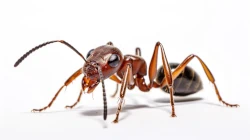
Some swarms contain hundreds of thousands of ants moving together.
Worker ants communicate by laying pheromone trails for others to follow. When danger appears, soldiers rush to the front lines to defend the colony.
Individual ants follow simple rules, but together they create highly organised behaviour.
COLONIES CAN BUILD BRIDGES USING THEIR OWN BODIES TO CROSS GAPS.
Ants at the bottom of a living bridge remain still while others walk over them.
Driver ants mainly move on foot and cannot fly once they become workers.
MOST ACTIVITY TAKES PLACE DURING COOLER PARTS OF THE DAY OR NIGHT.
DURING MIGRATIONS, THE COLONY PROTECTS THE QUEEN IN THE CENTRE OF THE MOVING SWARM. IF A TRAIL IS BROKEN, WORKERS QUICKLY SEARCH FOR THE MISSING CHEMICAL PATH.
Driver ants are especially important predators of termites in African ecosystems.
Colonies can react rapidly to attacks from predators or rival ants.
Driver ants sometimes overwhelm enemies simply through massive numbers.
Workers cooperate to carry food items much larger than themselves.
SOME ANTS SPECIALISE IN CARING FOR LARVAE WHILE OTHERS FOCUS ONLY ON DEFENCE OR FOOD GATHERING.
Scientists compare ant colonies to “superorganisms” because they function almost like a single living creature.
Driver ants do not hibernate in warm African climates.
Colonies can become highly aggressive if disturbed.
Swarms can strip large insects down to skeletons surprisingly quickly.
THEY HUNT MAINLY THROUGH OVERWHELMING NUMBERS RATHER THAN SPEED OR VENOM.
WORKER ANTS SPREAD OUT LIKE A MOVING NET WHILE SEARCHING FOR PREY.
INSECTS TRYING TO ESCAPE ARE QUICKLY SURROUNDED.
SOLDIER ANTS ARE HEAVILY BUILT AND ACT AS LIVING BODYGUARDS FOR THE COLONY. THEIR JAWS CAN SLICE THROUGH INSECT SHELLS AND SOFT ANIMAL TISSUE.
Colonies also scavenge dead animals when available.
The ants cut food into smaller pieces before carrying it back underground. Large prey may require
hundreds of workers working together.
Birds such as drongos and hornbills often follow ant swarms to catch fleeing insects.
Some reptiles avoid driver ant paths because of their painful bites.
DRIVER ANTS THEMSELVES ARE EATEN BY AARDVARKS, BIRDS, SPIDERS, AND SOME REPTILES.
Pangolins feed heavily on ants and termites, including species related to driver ants.
Their hunting activity helps control populations of many insects.
DRIVER ANTS RARELY TARGET HUMANS UNLESS THE NEST OR TRAIL IS DISTURBED.
Their bites can be painful because of their strong jaws.
Unlike a honeybee, which loses its stinger and dies after a single sting, a driver ant soldier can bite repeatedly without any harm to itself, making it a relentless and highly effective defender.
Some species can release alarm chemicals when attacking prey.