By: Jenni Davies
Every home has a heartbeat. For Marié de Klerk, that heartbeat has a glossy caramel coat, four paws, and enough energy to power the whole dorp.
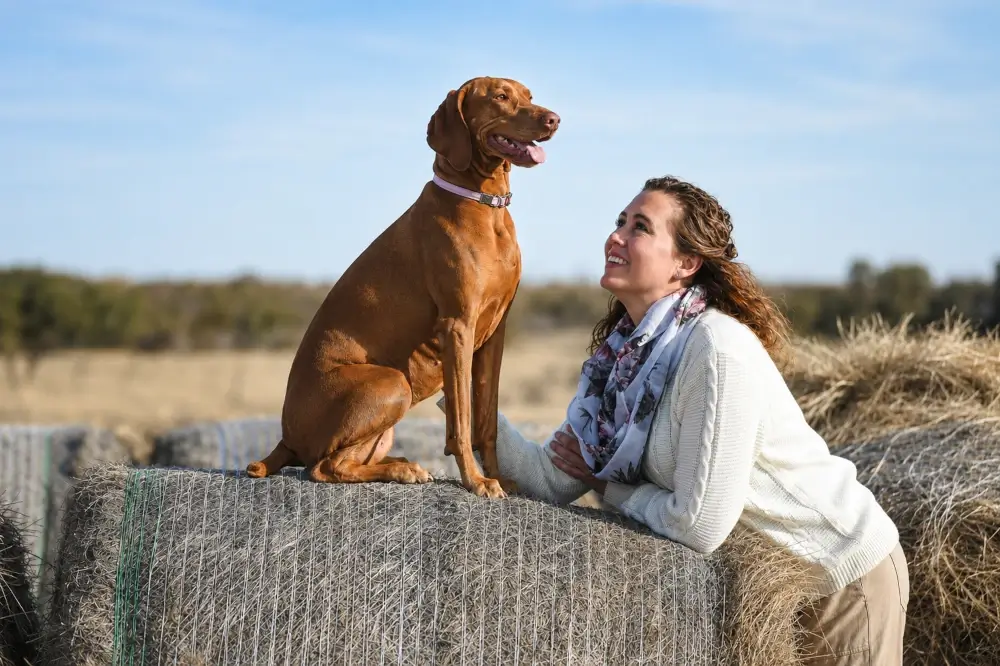
Nine-year-old Zoey, a Hungarian Vizsla from Kimberley, greets Marié with a wide smile every morning and dances like popcorn whenever she returns home. Whether Zoey is welcoming clients at the veterinary clinic where Marié works, swimming laps in a farm dam, chasing swallows across lucerne fields, or mothering orphaned lambs, she approaches every moment with the enthusiasm of a puppy. It’s no wonder she’s the light of Marié’s life.
Born to run
Zoey is always in motion. “Her absolute greatest joy in life is running. She loves racing across the fields when the swallows dip low almost as if they’re playing with her, knowing she’ll never catch them. Previously, I worked on a game farm and if I drove anywhere, Zoey insisted on jogging to get there instead.” Even now, at nine years old, people regularly mistake her for a young dog. “Most people think she’s two or three years old,” laughs Marié. Marié has made sure that drive is matched with plenty of exercise, helping Zoey stay fit, strong, and at an ideal weight. In turn, Zoey gets everyone moving. “We have a 10-year-old Border Collie and Zoey keeps him young and on his toes. She’s also friends with a Ridgeback and a Staffie, and once that bunch gets going, then its sheer chaos. If she wants to play ball, she’ll nibble my legs until I join in.”
Guardian of the heart
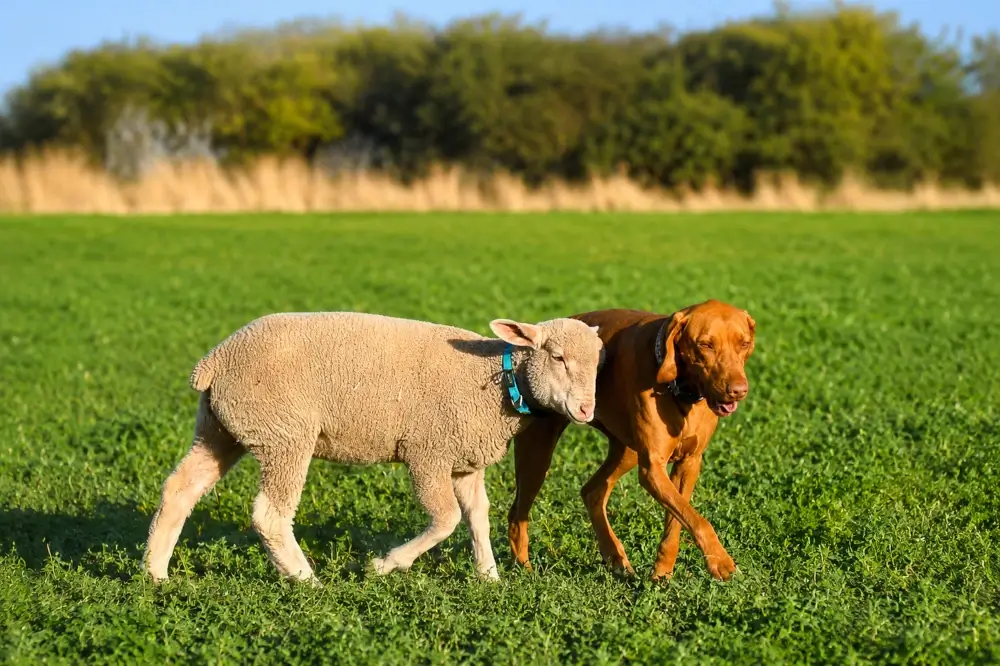
But it’s not just Zoey’s boundless zest for life that makes her special. Marié often takes in baby animals needing hand rearing and, whether it’s a lamb, chick, calf, or antelope, Zoey immediately appoints herself as foster mom. “Gentle, patient, curious, loving and she cares for each one as if they were her own,” says Marié. When Marié hand-raised an orphaned lamb named Clara, everywhere that Zoey went, the lamb was sure to go. “If I drove somewhere, both had to come. First sharing the passenger seat, then, as Clara grew, she relaxed on the floor space below while Zoey watched the world from above. Everyone thought it was hilarious. Me, my big dog and a sheep crammed into a little bakkie.” But, Zoey doesn’t reserve her mothering for animals, says Marié. “She comes to sit by you if you’re sad and she understands more than you think.”
Working 9-to-5
At Medivet Veterinary Clinic – Kimberley, Zoey has become something of a local celebrity. While Marié works as practice manager, Zoey acts as unofficial receptionist, stretched out in front of the desk, greeting clients and soaking up attention. “She loves people,” says Marié. “Everyone who walks in wants to say hello to Zoey, and she wants to jump up and meet every single one of them, especially the puppies.” Zoey’s place in the clinic mirrors her place at home: always nearby, always involved, always part of the moment. It’s who she is. And that relies on healthy joints.
The mechanics of movement
Bones provide the body’s structure; joints are where they meet. When movement takes place, bones should glide against each other in a smooth, controlled way. This is facilitated by a thin layer of spongy cushioning between the bones called cartilage, and further smoothed with synovial fluid. The body naturally produces the compounds needed to build, maintain, and repair healthy cartilage.
However, age-related wear and tear, injuries, excess weight, or inherited conditions such as hip dysplasia can cause this cushioning to become thinner or erode completely. Synovial fluid can also become less effective with age, reducing its ability to lubricate. As this protection is lost, bone begins rubbing against bone, causing damage, stiffness, reduced mobility, and pain.
This degenerative joint condition caused by gradual cartilage breakdown is called osteoarthritis, often called simply arthritis. In more advanced cases, fragments of cartilage or bone can break away, and bony growths may develop around the joint. Osteoarthritis is one of the most common causes of chronic pain and reduced mobility in animals.
The body’s own cartilage support system can become less efficient with age or increased joint stress. When wear begins outpacing repair, providing extra building blocks with supplements may help support normal function. This can be valuable at different stages of life both to help protect joints in dogs and cats predisposed to joint problems, or later on when age, injury, or wear and tear begin to take their toll.
Keeping her going
Before Zoey joined her family, Marié researched Vizslas extensively and knew the breed is predisposed to hip problems. Instead of waiting for issues to develop, she took a proactive approach. “I read up about joint nutrients and care, so I started giving her GCS Joint Care Advanced Powder from around two years old, along with extra omega 3 fatty acids, and of course, keeping her fit.” At the vet clinic, Marié sees dogs of similar ages every day and the differences in mobility and overall comfort reinforce her belief in starting early.
When Zoey suffered an injury to her hind leg on the farm, Marié feared the worst. Fortunately, X-rays showed no broken bones or hip problems and, after a short period of rest (not easy for a tail-wagging tornado like Zoey) and vet treatment, Zoey bounced back remarkably fast. “I think if she didn’t have the joint support, the healthy weight, and the active lifestyle, she wouldn’t have recovered as quickly,” Marié says. “We get dogs at the clinic with similar injuries and it takes them very long to recover.”
Marie’s advice is that anyone with dogs especially those prone to hip or osteoarthritis problems start early with joint support. “I’m not a vet or a sales person; I just know what works for Zoey and what I see at work. The earlier you start, the better, but, it is never too late. If you see your dog struggles, start immediately. With all the factors such as weight, exercise, supplements, etcetera, you really can extend your dog’s quality of life.”
Like everyone who is fortunate enough to share their lives with a furry family member, for Marié, Zoey is more than a pet. “The moustache and the paws are getting grey, but she is as lively as a puppy, an exciting ball of fur that comes everywhere with me, plays all day, chases birds, is just busy. She’s the light of my life.”
Keeping pets active, comfortable, and engaged isn’t just about mobility it’s about preserving the moments that make a house feel like home. And if Zoey has anything to say about it, there are still many adventures, ball games and fostering session to come.
Practical tips for managing osteoarthritis
- Manage weight. Extra weight puts more pressure on joints. Keeping your pet’s weight in check is a key part of managing arthritis.
- Keep moving: Regular, gentle exercise helps strengthen joint-supporting muscles, encourages synovial fluid movement, and improves blood flow. Stick to short, calm walks or swimming as suited to your pet’s ability.
- Supplement for joint repair and support. Supplements can help provide the building blocks the body uses to maintain and support healthy cartilage.
- Keep them comfy: Simple changes at home improve quality of life. Think easier access to food bowls and litter trays, supportive bedding, extra warmth, non-slip mats or booties for better traction on tiles, and ramps or steps to help pets access higher surfaces like couches.
- Manage pain: Have regular check-ups. If needed, your veterinarian can advise you on safe pain relief options. Never give human pain medications to pets.
The Joint Support Big Six
- Glucosamine: Glucosamine is cartilage “raw material”, and supplementing helps support cartilage repair and maintenance.
- Chondroitin: Helps cartilage retain water and elasticity while supporting shock absorption in the joints.
- MSM (methylsuphonylmethane): A natural sulphur compound that supports connective tissue health and may help manage inflammation linked to joint discomfort.
- Omega 3 fatty acids: Known for their anti-inflammatory properties, omega 3s can help support joint comfort and overall skin and coat health.
- Green-Lipped Mussel Extract (GLME): A natural source of omega 3 fatty acids and other joint-supportive nutrients.
- Collagen (Type II): A structural protein found in cartilage needed for strength, flexibility, and resilience.
Signs that your pets may be developing osteoarthritis
Joint trouble tends to happen so gradually that owners don’t always notice it immediately. Here’s what to look out for:
- Less enthusiastic. They’re hesitant to run, play, go for walks, hop into the car, things they enjoyed before.
- Slow to start. They seem stiff or “a bit slow” when getting up, especially after sleeping or resting, but seem better after they’ve been moving.
- Posture and movement changes. Walking slower, being less keen to jump onto your lap or the couch, sitting more hunched.
- Winter isn’t their friend. Joint problems tend to worsen in damp or cold weather.
- Not part of the gang. They spend more time resting and less time shadowing you around or playing with other animals, or they lag behind on walks.
- Tossing and turning. Arthritis can make it tough to get comfortable, so they may seem restless, unsettled or even anxious.
- Getting grumpy. Chronic pain is miserable and arthritic pets may become withdrawn, irritable, hesitant to be handled, or even lash out with nips or scratches.
- Cats look scruffy. Pain and stiffness makes grooming challenging, so they start looking untidy or greasy.
Safety note: This information does not replace veterinary advice. Always consult your veterinarian if you are concerned that your pet may be in pain or showing signs of joint discomfort.