
By: Jenni Davies
Our furry family members don’t all enter our lives at the same stage. We welcome some as roly-poly babies or gangly juveniles; others as fully fledged adults or frosty-faced seniors. Wherever the journey begins, our lives together are a story of constant growth and development.
One thing’s for sure: every stage of life brings different needs. And the care we give them now helps shape their futures with us.
Top speed from tiny tot to T-Rex
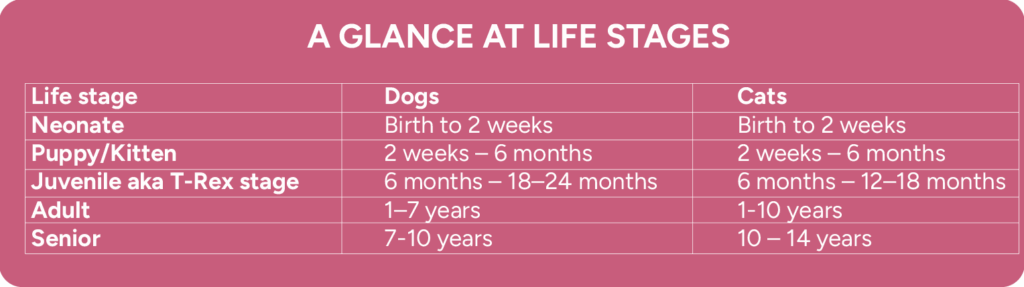
With puppies and kittens, things unfold like lightning. They start out blind, deaf, and content to snuggle in a milky haze with mom and siblings. But within 2 weeks, that’s all changed – and it’s not long before a bobble-headed wobbly crawl becomes full-speed-ahead action.
Then your bouncy little fluffball reaches 6 months – and suddenly you’re living with a puppy-shaped T-Rex. No plakkie is safe from little chompers. No flower pot remains unturned. Kittens scale curtains like they’re the Compassberg. Welcome to the juvenile months – supervision is now your full-time job.
With growth happening so fast, their need for support is high. Good preventative care and the right nutrition are crucial. But good food is only part of the picture. Without a healthy digestive system, even the best food won’t help. This is the time to build a strong gut microbiome, needed for good digestion and immune health. Alongside food, pro- and prebiotics such as Probiflora* can provide a helping hand (once weaned).
Despite your best gut-building efforts, however, tummy troubles are common in young animals. Their developing systems react to new foods, environmental changes, and new routines. They’re more vulnerable to infections and, at times, even worms – and deworming treatment – can temporarily turn things upside
down. Where appropriate, supplements containing probiotics and binding agents like Diomec Plus may help support digestive stability*.
Another essential part of pet healthcare is parasite control. Intestinal worms are extremely common in young animals and can affect their development. Parasites divert nutrients needed for organ, bone, brain, and muscle development. Left untreated, worms can disrupt the gut microbiome’s balance and impact immunity and long-term wellbeing. That’s why establishing a proper deworming routine early is key. Opt for broad-spectrum veterinary dewormers like Triworm that tackle tapeworms, hookworms, roundworms, and whipworms, and which offer different formats like liquids for puppies/kittens and pastes and tablets for older dogs and cats. And remember: flea control goes hand-in-hand with deworming.
(PS: don’t forget vaccinations!)
All grown up
Eventually, the chaos settles and your soft furnishings are safe again. Once they reach adulthood (around 12–18 months, depending on size, breed, and species), our focus shifts towards maintenance and building future resilience with nutrition, parasite control, lifestyle, and preventative care. Having a strong early foundation makes this easier – but even if they didn’t have the best start, there is still much we can do.
Two particularly common issues seen in adult dogs are skin allergies and joint problems.
How pets grow differently – and why it matters
Smaller dogs reach adult size quickly (6-12 months). But, because their total growth is smaller, there’s less strain on cells, joints and organs so they tend to age more slowly over time. However, they tend to be more prone to dental problems and Larger dogs have a steeper growth curve, adding much more mass and bone over a longer time (18-24 months), placing extra stress on the body. Even though they reach adult size later, they tend to show signs of wear and tear sooner. These dogs may benefit from more frequent vet check-ups, tailored exercise, and receive joint support earlier. The same applies to breeds genetically prone to conditions like arthritis (e.g. German Shepherds) or spinal degeneration (e.g. Dachshunds). But what about cats? They age more uniformly, reaching adult size around 12 months. However, certain pedigree breeds with extreme traits like Persians and Scottish Folds may develop age-related health issues earlier. This means they may need senior-style care earlier than others of the same age.
What’s my age?
Ever tried figuring out your pet’s “human age”? Because dogs and cats age much faster than us in their first years, it’s not as simple as just multiplying by 7 or 9. Here’s a general rule of thumb:
- Year 1: add 15 years
- Year 2: add 9 years
- Year 3 and up: add around 5 years for dogs and 4 years for cats. Smaller breed dogs age slower after 2 years (around 4 years/year) and large breeds age faster (up to 6-7 years/year).
That means your 1-year-old cat is a 15-year-old teenager and, by the time they reach 15, they’re in their mid-70s. A 5-year-old Great Dane is around 45, while a small Jack Russell is
closer to 36.

Did you know?
If you see fleas on your dog or cat, there’s a good chance they have tapeworms too. Fleas often carry tapeworm larvae – when the flea is swallowed, the larvae can develop into worms in the intestines. Reinfection happens easily and some animals may have a higher flea and worm burden, needing a course of treatment. That’s why deworming isn’t a once-off. Puppies and kittens need deworming every 2 weeks from 2 weeks of age until 12 weeks. Thereafter, monthly until 6 months, then every 3-6 months depending on their lifestyle (for example, free-roaming cats may need more frequent treatment than indoor cats).
Canine Atopic Dermatitis – with its characteristic itching, skin irritation, redness, and, sometimes, recurring ear infections – is one of the most common skin conditions in dogs. It’s often linked to the environment, pollen, dust mites, grasses, and sometimes food. Aside from reducing potential allergens (such as keeping bedding clean and managing dust), supplementing essential fatty acids can help. These nutrients have anti-inflammatory properties, support skin hydration, and are needed for a healthy skin barrier. It’s not easy to get these nutrients from diet alone, so supplements like Efazol can provide the extra support.
Joint health is another important focus, particularly for large breed and active dogs or those with previous injuries or genetic predisposition. As animals age, wear and tear can contribute to degenerative joint diseases like osteoarthritis, affecting mobility and causing pain and stiffness.
Maintaining a healthy weight reduces excess pressure, while ensuring appropriate exercise keeps muscles strong to provide support. Nutrients such
as glucosamine and chondroitin help support cartilage – the cushion between the joints which allows for smooth movement. Supplements – like GCS Joint Care Advanced for dogs – can make it easier for you to provide such nutrients. Supporting joints now may help with comfort and function later.
Emotional wellbeing also becomes increasingly important. Now that they’re old enough, they may join us on adventures – but new experiences can be scary. Separation anxiety and loud noises like thunder and fireworks are common stress triggers, and pets from tough backgrounds may find the world particularly stressful. Providing regular exercise, a safe space (such as an igloo bed or indoor kennel), and consistent behavioural work are key. Supplements with B vitamins and amino acids L-Tryptophan, L-Theanine, and Peptazine like Calmeze Plus provide extra nutritional support for the nervous system.
Ageing gracefully through the Golden Years
And then, all too soon, muzzles become frosty, the pitter-patter of paws slows down, and the selective deafness isn’t quite so selective anymore. We’re privileged to share these years with them – but it’s hard to watch age sneak up. The goal now is to support daily quality of life by providing a comfortable environment – extra-soft bedding, non-slip floor covers, steps up to the couch – and manage age-related conditions consistently.
One of the most common challenges for older animals is reduced mobility – maybe they’re not running to the gate as swiftly, or the climb up to the counter is more arduous. Some senior pets have chronic pain, digestive changes, or cognitive decline. They may become clingier or more anxious as their senses alter, and many find changes to their routine upsetting.
Dire though it may sound, with simple adjustments – nutrition, exercise, pplementation, vet visits, and lifestyle – we can make an immense difference.
Again, it starts with diet and digestion. Senior animals have specific nutritional needs, while age-related changes in gut microbiome impact nutrient absorption and immune function. They generally benefit from specifically formulated senior-pet foods, and added probiotics like Probivet to support a balanced gut environment.
Constipation is a common senior malady. Staying hydrated and exercising – even with gentle strolls around the garden – helps keep things moving. Ensure they get enough dietary fibre – cooked pumpkin works well for many dogs. Cats may be less enthusiastic and wheatgrass may do the trick for them.
Animals struggling with chronic pain, stress, poor appetite, or anxiety may benefit from CBD oil supplements like C*Vet. CBD (cannabidiol) is a plant extract which has become increasingly popular for supporting comfort and relaxation in senior pets.
Our pets grow alongside us, from puppy-breath yawns to the deep snores of a contented senior companion. They give us unconditional love and companionship. In return, our role is to help them live their best lives – at every stage.
From good nutrition and preventative care to veterinary treatment and support, the choices we make shape their wellbeing. And, while their needs may change, one thing only grows stronger: the bond we share.
*Safety note: This information is not a substitute for veterinary advice and supplements do not replace prescribed medication. Puppies, kittens, small animals, and senior or immune-compromised pets can deteriorate within hours from uncontrolled diarrhoea and/or vomiting. Seek veterinary attention promptly. Avoid self-diagnosing – many conditions may masquerade as others which need different treatment. And always consult your veterinarian before giving supplements.